
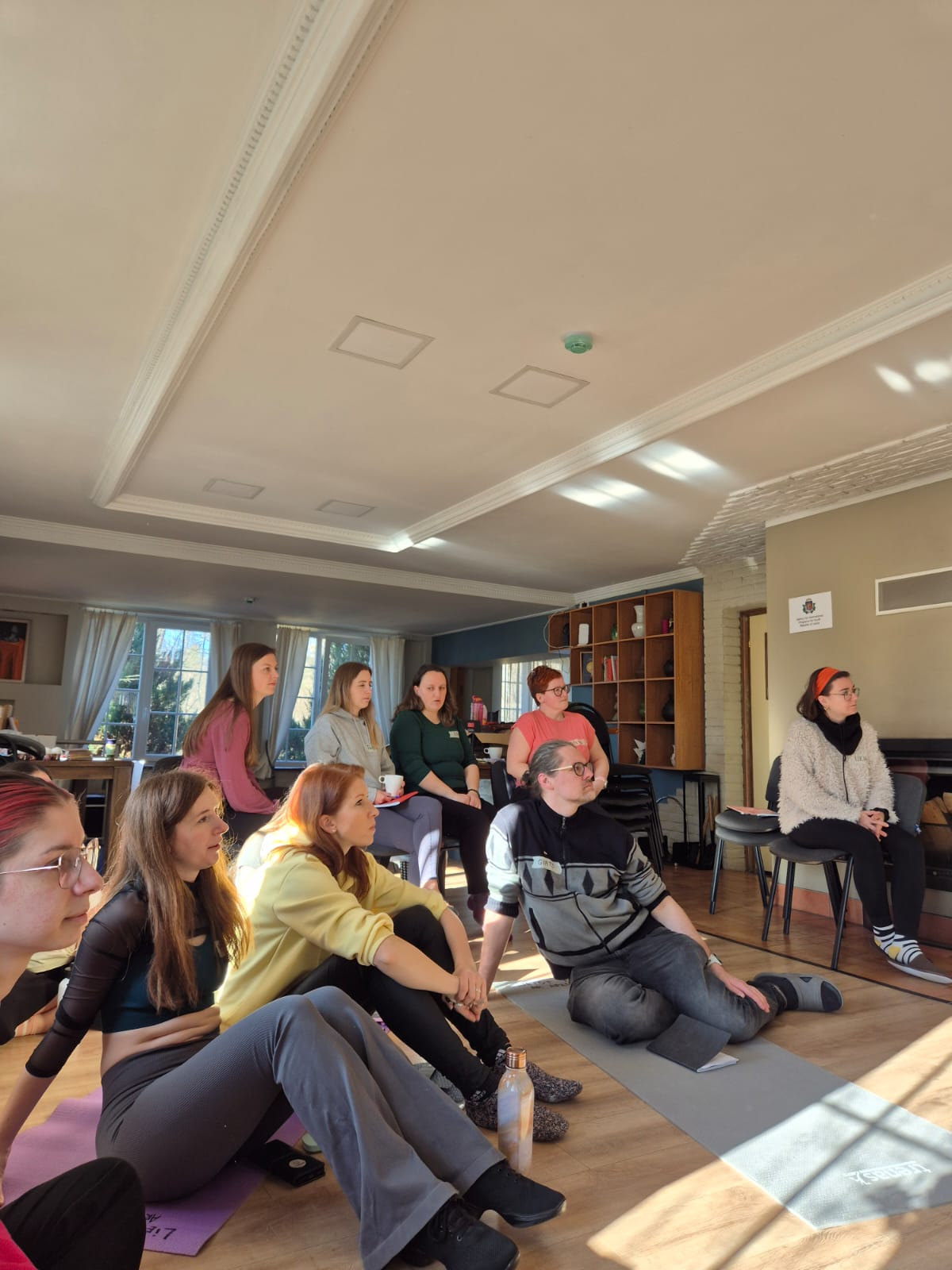
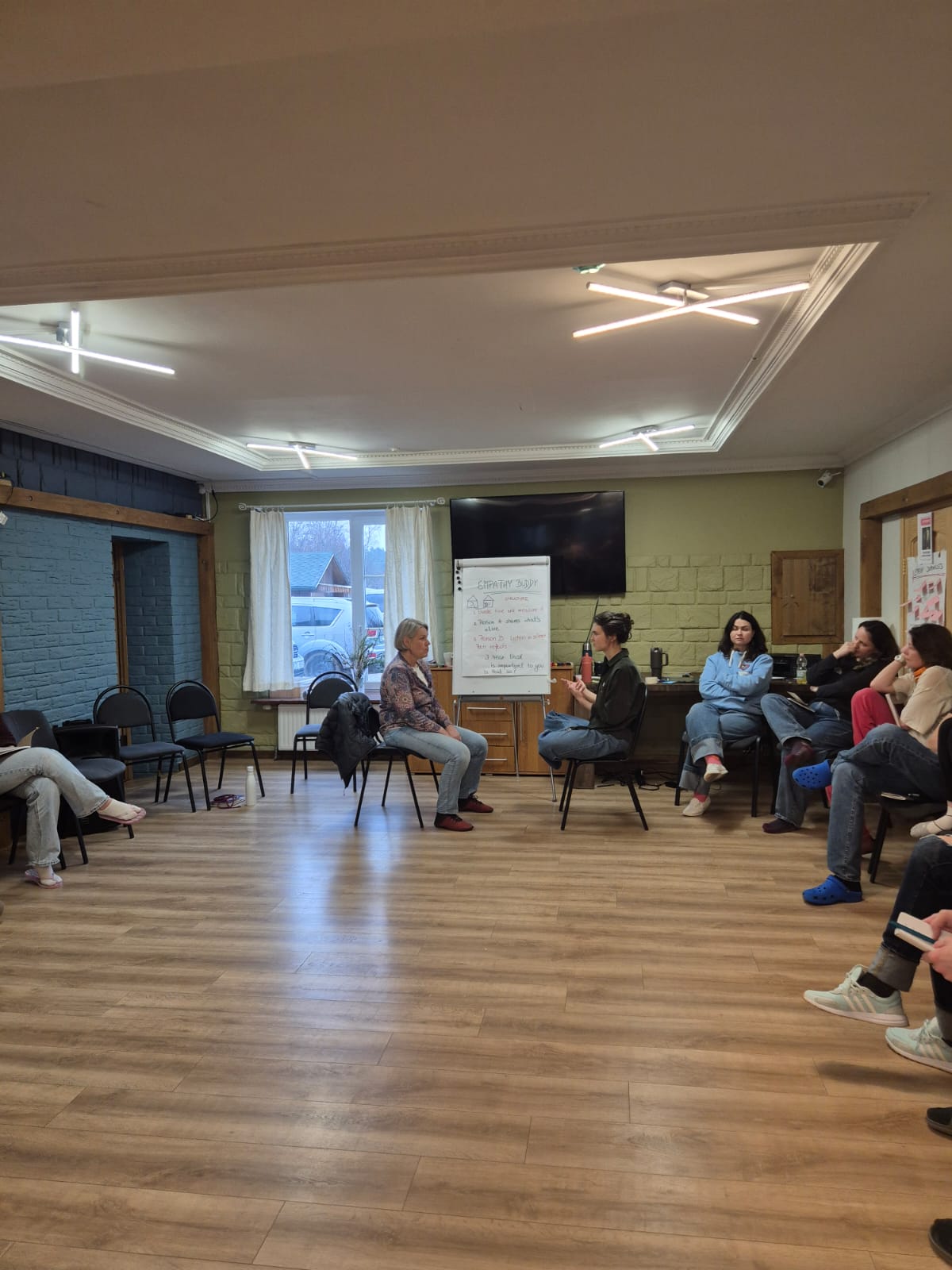
A few weeks ago, I had the opportunity to take part in “Empathy Journalists”, an Erasmus+ training course on Nonviolent Communication (NVC) that brought together youth workers from across Europe in Latvia from 11 to 20 March 2026. The project aimed to explore how empathy and communication can help young people navigate sensitive social and political conversations.
When people hear the term Nonviolent Communication, they sometimes imagine avoiding conflict or always being agreeable. My experience during the training showed something quite different.
NVC is not about suppressing disagreements. It is about understanding what lies beneath them.
Through practical exercises and discussions, we explored how to separate observations from interpretations, recognize emotions without judgment, identify underlying needs, and formulate requests that foster dialogue instead of confrontation. Those ideas sound simple on paper. Applying them in real conversations is another story.
And that made me reflect on something I experience regularly in youth work.
What happens when young people want to talk about topics that easily divide people? 🌍
Migration. Identity. Mental health. Climate change. Political opinions. Discrimination.
These are exactly the kinds of issues addressed by the project, which seeks to support youth workers with empathy-based tools, reduce polarization, and strengthen respectful civic participation.
We often encourage young people to express themselves and participate actively in society. Yet creating spaces where people genuinely feel heard can be much harder than encouraging them to speak.
Because difficult conversations are rarely just about facts.
They involve emotions, identities, personal experiences, and sometimes fears that remain invisible.
During the training, facilitated by Marta Kułaga, a CNVC-certified trainer from Poland, and Marija Cirule, a youth worker and NVC trainer candidate from Latvia, we experienced firsthand how empathy can change the quality of interactions. Their approach focused less on finding the “right answer” and more on creating conditions for authentic connection.
I found myself thinking about conversations I’ve had in the past where providing more information didn’t solve the disagreement. Sometimes what people needed first was not another argument, but the feeling that their perspective had been acknowledged.
Of course, I don’t see NVC as a magic solution.
Not every conversation can be transformed through empathy alone. There are moments when setting boundaries matters. There are situations where stepping back is healthier than continuing an exchange that no longer serves anyone.
Still, I left Latvia with a renewed appreciation for curiosity.
Not the kind that seeks to convince others immediately.
The kind that tries to understand first.
The Empathy Journalists project also introduced the concept of Empathy Journalism: an approach that encourages listening, reducing “us versus them” thinking, and helping young people express their voices clearly while building resilience in challenging conversations.
At a time when public debates often feel increasingly polarized, these skills seem more relevant than ever.
I’m curious about your perspective:
Have you ever experienced a situation where empathy changed the outcome of a difficult conversation? And where do you draw the line between engaging and stepping back?
Many thanks to KALM International Trainings, the trainers, all participants, and the Erasmus+ programme for creating the space for this experience. I’m looking forward to seeing how the ideas developed during the project continue to grow through local activities across Europe in the coming months. 🙏
Leave a Reply